Introduction: Melorheostosis is a rare bone dysplasia. It is mainly a radiographic diagnosis with distinct findings of endosteal or periosteal sclerosis along the axis of long bones, resembling the flowing wax. It is usually polyostotic and monomelic. Clinical manifestations are pain, limitation of joint movements, deformities, and contractures. Leg length discrepancy may be found, usually the affected limb being shorter.
Case presentation: We present an adolescent boy, with melorheostosis of the lower limb. The affected limb was longer with equally divided discrepancy of the femur and tibia. There were no another symptoms. After a thorough investigation, we performed epiphysiodesis both medial and lateral of the distal femoral and proximal tibial growth plate, using8eight plates. At the end of the growth, there was almost complete equalization of the length of his lower limbs.
Conclusion: Melorheostosis may be present with leg length discrepancy leg length discrepancy, with an exception, being that the affected limb is longer. Epiphysiodesis with eight plates is an effective method of limb length equalization.
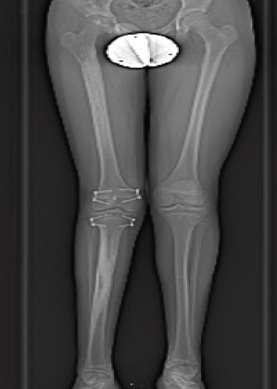
Figure 6 Scanogram at the time of removal of his eight plates, 2 years after his procedure.
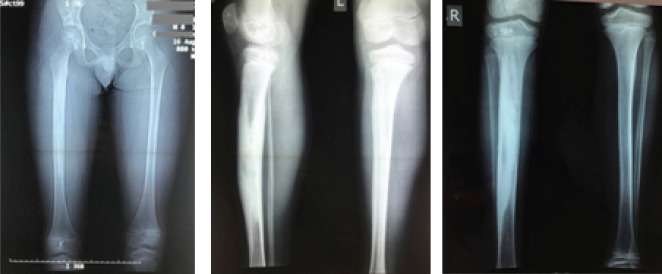
Figure 1 (a, b,-c)X-ray of femur and tibia with endosteal ossification of the femur and endosteal and cortical thickening of the tibia. Ossification of the epiphysis.
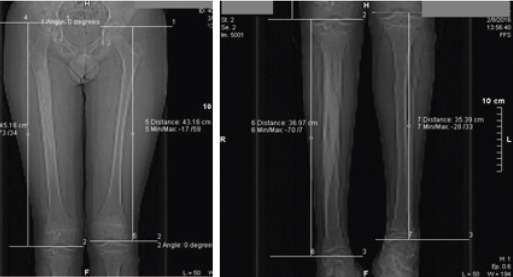
Figure 2 (a and b)Scanogram of the femur and tibia, with limb length discrepancy LLD of 2cm in the femur and 1, 6 cm in the tibia.
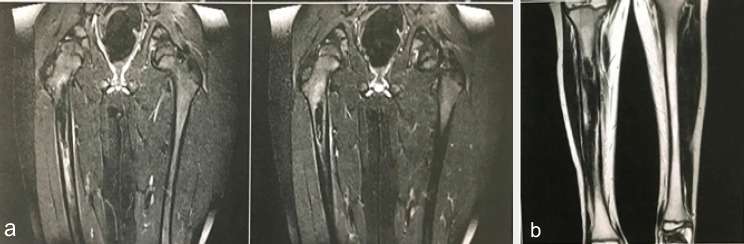
Figure 3 (a and b)Magnetic resonance imaging MRI femur and tibia with heterogeneous intensities of the endosteum, with increased uptake on gadolinium injection.
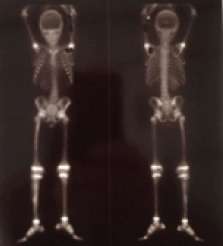
Figure 4 Bone scan with increased uptake on the affected area.
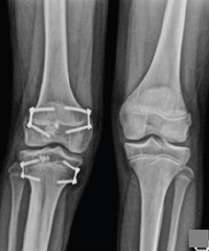
Figure 5 Epiphysiodesis with 8eight plates.