
X-linked hypophosphatemia (XLH) is a rare X-linked dominant inherited disorder caused by loss-of-function variants in the PHEX gene and characterized by renal phosphate wasting, hypophosphatemia, abnormal vitamin D metabolism, growth retardation and lower limb deformities. We describe a case of XLH-rickets in a 7-year-old girl with scaphocephaly, Chiari syndrome type I and syringomyelia, with a de novo non-canonical splice variant (c.1080-3C > G) in intron 9 of the PHEX gene, that has not been previously described.
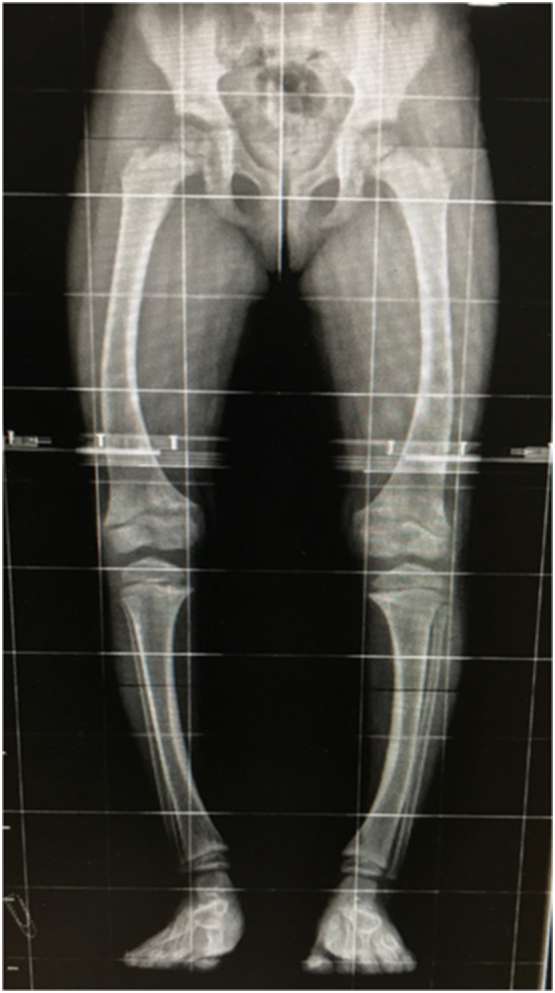
Fig. 1 Anteroposterior radiograph of the femur and tibia, shows increased axial height of the physis. The metaphyseal area is widened and there is bowing of the axis of the femur and tibia. The joint line of the hips, knees, and ankles remains parallel to the ground.
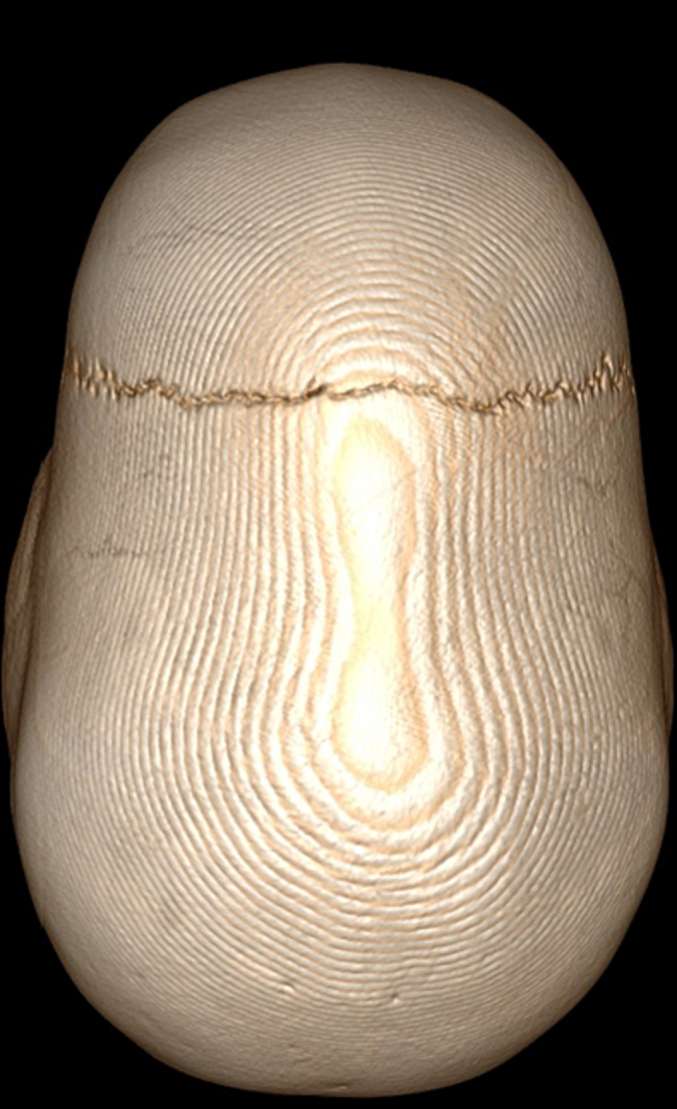
Fig. 2 Head CT (3D reconstruction) at the age of 4 years, showing evident elongation of the anteroposterior axis of the skull (scaphocephaly) as a result of the premature closure of the sagittal suture.
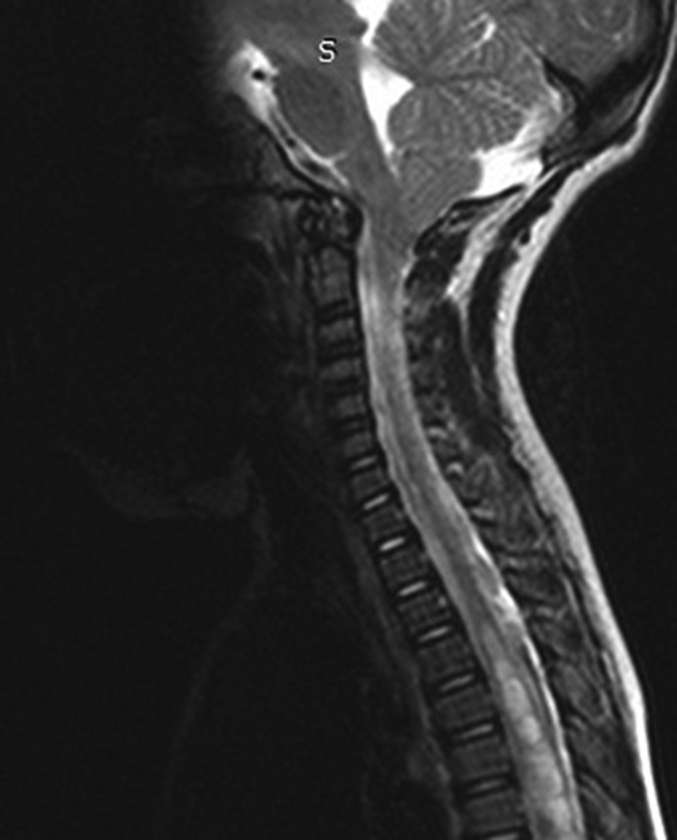
Fig. 3 Midline sagittal T2 MRI of the craniovertebral junction, cervical and upper thoracic spine at the age of 4 years. There is crowding at the level of the foramen magnum with altered CSF flow (not shown here) and syringomyelia from the T3/T4 level and caudally.
 Restoration of Limb Length Discrepancy and Alignment With the Ilizarov Device After Management of an Aneurysmal Bone Cyst Crossing the Distal Femoral Physis
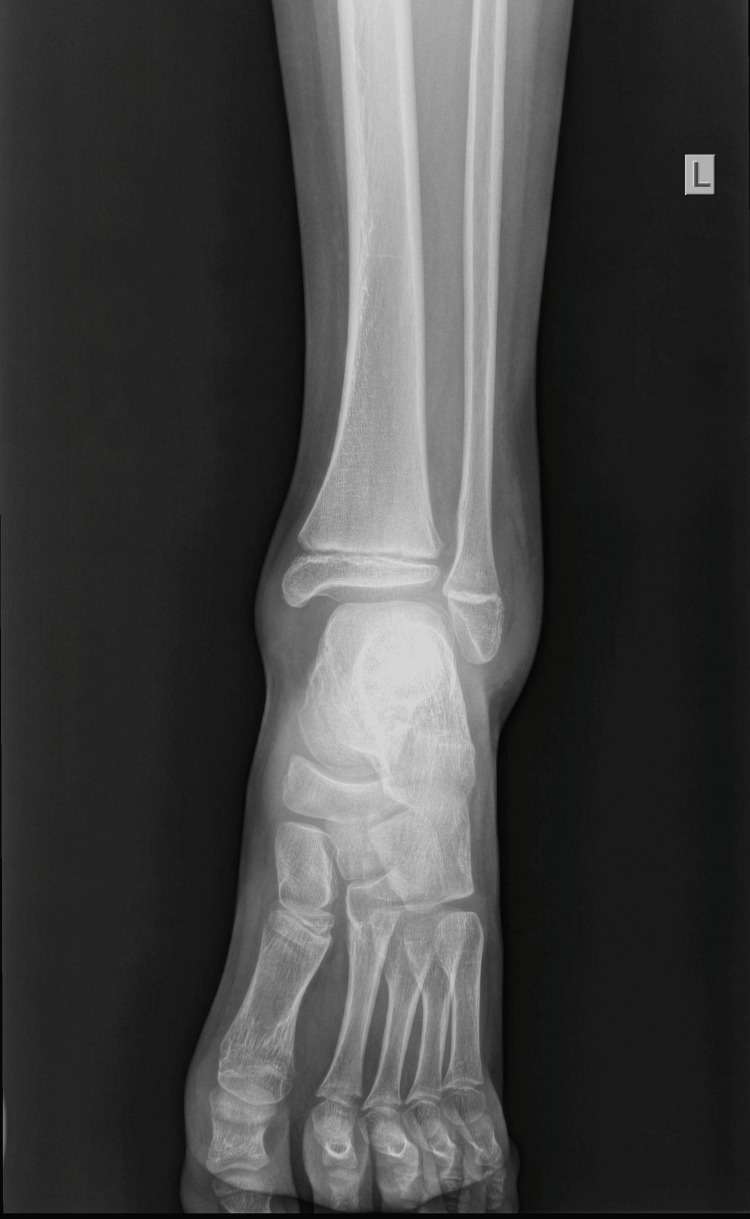 Displaced Distal Fibular Epiphysis in a Child: A Clinical and Radiological Evaluation of a Rare Injury Hidden From the Initial Radiological Examination